How to Let Go of Resentment: Feel It Instead of Replaying It
Forgiving in your head hasn't worked and it keeps coming back. How to let go of resentment by going to where it sits: the jaw, the throat, the chest.


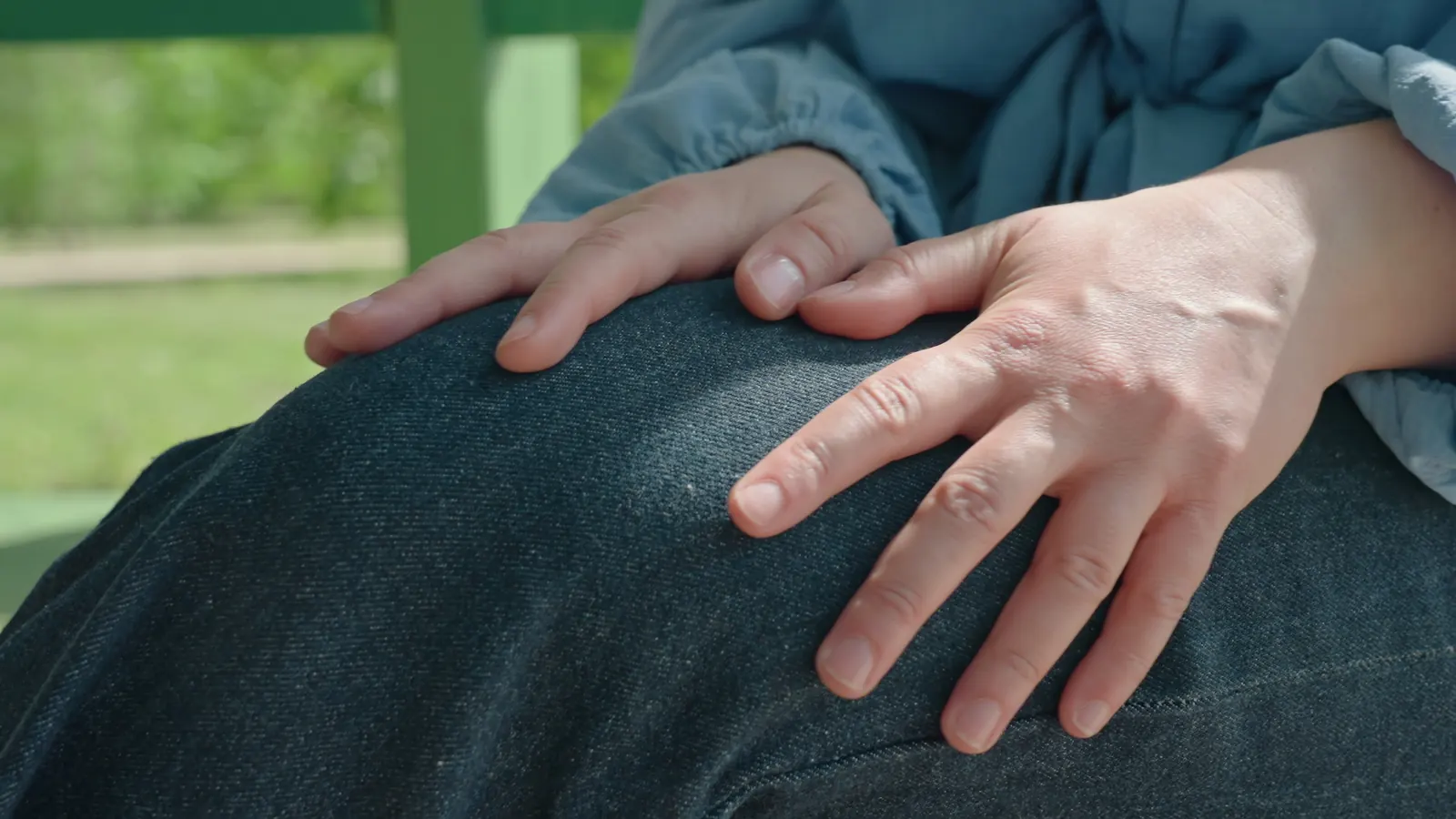
You did the right things. You told yourself to rise above it. You even said the words, “I forgive you.” And then their name lights up your phone, and your jaw is tight before you’ve read a single word.
That is resentment. Not a decision you made. A feeling that never got its turn.
You can’t think your way out of resentment, because it doesn’t live in your thoughts. The thoughts are only the replay: what they said, what you should have said, how unfair it was. The thing itself is in your body. And it has been waiting there, sometimes for years.
So this isn’t another list of reasons to forgive. It’s a way to let the feeling move. After that, forgiving, or not forgiving, can be a calm choice instead of a war with yourself.
Why resentment stays so long
Most of us learned early that anger is ugly. So we did what we were taught. In our book we put it this way: “We swallow it. We turn it into politeness, into overeating, into headaches, into a sharp tone with the wrong person three days later.”
Resentment is what swallowed anger looks like after a while. It’s anger, plus hurt, plus everything you didn’t say, pressed down and kept down.
We describe it like this: “Every feeling you refused to feel is a train waiting outside the station.” The train doesn’t leave because you stopped looking at it. It waits. And every time something reminds you of that person, it blows the whistle again.
Then the mind takes over. It replays the scene. It builds the case. It writes the perfect reply you never sent. Each replay feels like doing something about it. It isn’t. Each replay is fuel. The mind gets louder, and the feeling underneath never gets one minute of your actual attention.
Resentment in the body: where it hides
Ask yourself, right now, while you think of that person: where does it sit?
Maybe it’s the jaw. The one you clench in your sleep. Maybe it’s a tight throat, full of sentences that never came out. Or a hot face, a stone under the ribs, or shoulders that ride up toward the ears the moment the subject comes up.
There’s no right answer, and no chart to look it up in. Your body is the only map. The point isn’t to name it. The point is to find it.
That matters, because once you know where resentment lives, you have somewhere to go that isn’t the replay.
How to release resentment without pretending you’re fine
Not by forgiving early. Forgiveness you force on yourself is just a more polite way of pushing the feeling back down. It may hold until the next family dinner.
Not by unloading it on them, either. In the book we say it simply: “Feeling it is allowed. Throwing it at someone is not.” You can feel the urge to send that message with your whole body, and not send it.
What’s left is the thing almost nobody has tried. You let it boil inside, “like water in a pot with the lid off. It will boil, and then it will settle.”
And when the anger has had its turn, there is often something else under it. Something soft, often hurt. You wanted something from that person: to be seen, to be chosen, to be treated fairly. Resentment is the guard standing in front of that softer thing. When the guard gets to rest, the hurt can finally be felt too.
If the anger feels bigger than resentment, hot and right at the surface, our piece on how to release anger stored in the body goes deeper into that part.
How to stop holding resentment when you still see them
It might be your sister, your ex who still picks up the kids, your mother. You can’t just walk away and let it fade.
What helps is knowing which part is yours. “You don’t choose the first reaction. It comes on its own, like the heat of spilled coffee. But you can choose the second one.” The first reaction is the clench. The second one is where you go next: into the story, or into your body.
So when it rises at the table, you don’t have to fix anything. Put part of your attention on the place that just lit up, and stay with it while the conversation goes on. No reply needed. No big speech.
And if you’re deciding something about that relationship, wait until you’ve felt it. Then decide.
One honest line here: letting go of resentment doesn’t mean staying where you’re being hurt. “If you are being hurt, your safety comes first, always.”
Practice10 min
The Feeling Session
- Find a place where nobody will need you for twenty minutes. Your bed is fine. The floor is better, with a blanket or a mat under you. Turn your phone face down, or put it in another room.
- Lie down on your back. Let the floor carry you. Legs straight or slightly apart. Nothing to arrange, nothing to get right.
- Cover your eyes. A scarf, a sleep mask, a folded T-shirt.
- Put your arms by your sides, palms down. Palms down tells the body there is nothing to grab and nothing to hold on to. You are not reaching for anything.
- Close your mouth and leave the breath alone. Don’t breathe deeply. Don’t count. Don’t use a technique. Whatever beats your heart can take care of your breathing too.
- Now stop moving. Completely. No scratching, no adjusting, no shifting the leg. When the body is still, the feelings that movement usually covers begin to rise.
- Ask one question: where is it heaviest in my body right now? Not yesterday. Not in general. Right now.
- Put all of your attention there, and keep it there. You are not trying to change it. You are not waiting for it to leave. You are simply with it, the way you would sit with a friend who is crying.
- Don’t follow the thoughts. They will come. Stories, memories, plans, opinions about this exercise. Let them pass like cars on a street. The moment you notice you are in a story, come back to the place in the body. No blame. Just come back.
- Don’t run. When it gets stronger, and it may, this is the moment everything in you will want to move, to open your eyes, to get up and do something useful. Stay. If you can, stay one more minute.
Before you start, think of that person once, on purpose. Let the jaw tighten, let the face get hot. Then stop thinking about them and go to where it landed. That’s the place you stay with. Start with ten minutes. You can stop at any time, and stopping is not failing.
What you might notice: heat rising, a trembling in the jaw, tears with no story attached. Or nothing at all the first time, and that’s fine too.
We learned this one the hard way ourselves. “Rytis had a great deal of anger in him, and for years he covered it with a thick layer of spirituality.” Violeta, in the house in Madeira where we used to run retreats, would sometimes boil over and shout. We both tried to hide it. It didn’t work. What worked was feeling it.
The name will light up your phone again, maybe next week, maybe at the next family dinner, and the jaw will tighten as if you had never lain down. For that moment the book has a chapter called “When it’s hard: the way through”: eight short steps, written to be opened on the bad day.
When their name comes up again
- When the replay starts, say one word inside: “Enough.” Then go to your body, not to the story. Find where the replay is pressing.
- Don’t send the message tonight. Not the long one, not the short sharp one. Write nothing. Feel first.
- Notice the sentence you keep rehearsing. “After everything I did for you.” “You never once asked.” The sentence points straight at the hurt under the anger.
- Ten seconds, a few times tomorrow. Close your eyes wherever you are, find the strongest sensation, change nothing, open your eyes. That’s the whole method in miniature.
- Lie down again in a day or two. “We can’t promise you how long it will take.” Each time is allowed to be different.
If the resentment has left you feeling flat and going nowhere, you might also recognize yourself in why do I feel stuck. Betrayal, forgiveness, and the hurt that stays after someone let you down each have their own page in our emotions section. If you’d like to see how the method works, start with the Feeling Session.
Their name on your phone, the jaw already tight before you’ve read a word: that’s where this started, and it may start there again. The difference is what happens in the next minute. You can leave the message unread, stay with the jaw until it has had its say, and only then decide whether to answer.